
Planning
28 June 2026 · 6 min read · Just In Time Removals
1. Plates travel on their edge
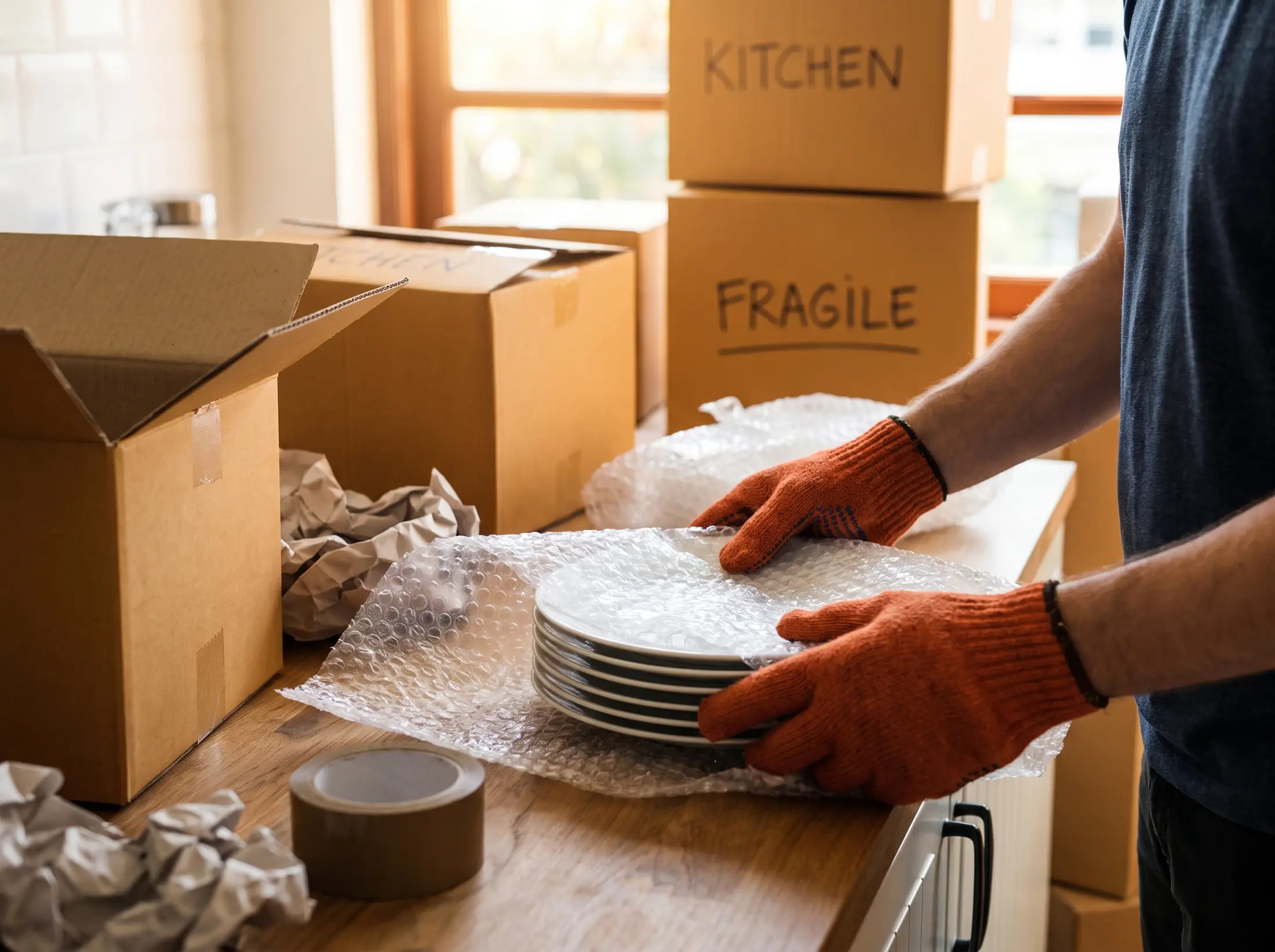
Stacked flat, a plate takes the full weight of everything above it on its weakest axis. Wrapped individually in packing paper and stood on edge like records in a crate, the same plate is enormously strong. This one change eliminates most crockery breakage.
2. Small boxes for heavy things
Books and crockery go in small cartons, linen and clothes in large ones. It feels inefficient, but a large carton full of books will fail at the base, and nobody can safely lift it anyway. Aim to keep every carton under about 20 kg.
3. Fill every void
A carton is only strong when it is full. Any space left inside lets contents move, and movement is what breaks things. Crumpled packing paper, not newspaper — newsprint transfers onto crockery and is miserable to clean off.
4. Glasses get a double wrap
Stemware is wrapped individually, the bowl padded, and packed upright in a divided carton. Never lie a wine glass on its side. If you do not have dividers, build them from folded cardboard — it takes five minutes and saves the set.
5. Label the top and two sides
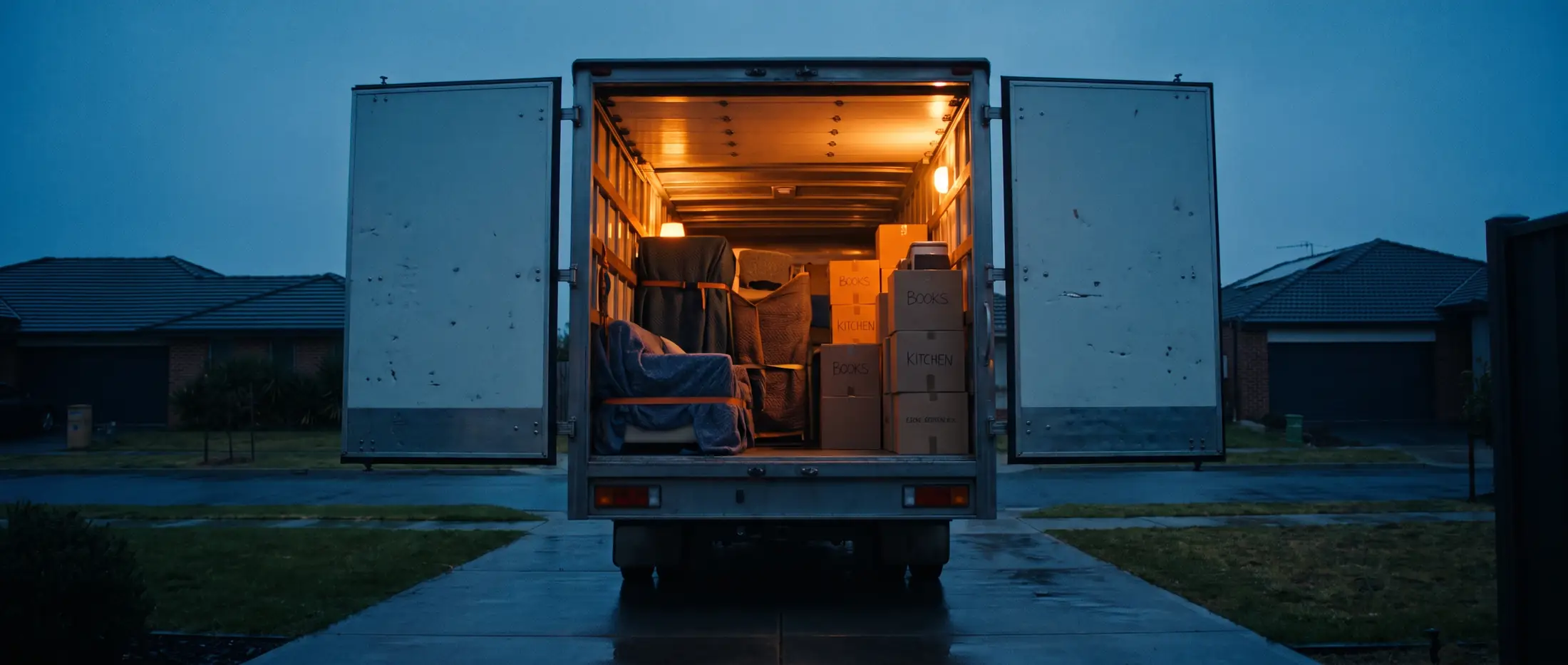
Room, contents and the word FRAGILE, written on the top and at least two sides. Cartons are stacked on a truck, and a label on a face nobody can see is a label that does not exist. Fragile cartons load last and offload first.
6. Screens and mirrors need a proper box
A flatscreen TV should go in a purpose-made TV carton or its original box, standing upright, never flat. Mirrors and framed art get corner protectors, a cross of tape over the glass, and are packed on edge between mattresses or in a picture carton. Flat-packed art is art that gets stood on.
When to hand it over
If you own an inherited dinner service, serious glassware, or a wall of framed pieces, a part-pack of just the kitchen and fragiles is one of the best-value line items on any quote. It is a few hours of a trained packer's time against a set that cannot be replaced.
Keep reading